Manual Setup - Overview
This guide explains how to set up your email account in Outlook for Windows using secure POP3 or IMAP with SSL/TLS encryption.
POP3 vs IMAP – which should I choose?
- POP3 (recommended for most users)
- Downloads a copy of your email to your device.
- Keeps a backup on your computer so you can store email for as long as you like.
- Helps save server space in your account.
- You can choose to leave a copy on the server for a few days (for example 7-14 days) so other devices can still receive new messages.
- IMAP (recommended if you use multiple devices heavily)
- Keeps all email on the server and syncs folders between all devices.
- What you do on one device (read/delete/move) is mirrored on other devices.
- Uses more server storage because messages stay on the server.
Note: Emails stored in your Inbox and Sent folders are automatically retained for 180 Days and other systems folders (Trash/Spam etc) are retained for 30 days to help manage disk usage. To keep messages longer, use POP3 to download your email and save a local copy or when using IMAP move messages into a custom folder such as “Saved Email”.
Server settings
Replace {YOUR-SERVER-ID} with the actual server ID given in your welcome email (for example, ez22).
Incoming mail (POP3)
- Protocol: POP3
- Server:
{YOUR-SERVER-ID}.ourcontrolpanel.com
- Port: 995
- Security: SSL/TLS
- Username: Your full email address (
address@example.com)
- Password: Your email password
Incoming mail (IMAP)
- Protocol: IMAP
- Server:
{YOUR-SERVER-ID}.ourcontrolpanel.com
- Port: 993
- Security: SSL/TLS
- Username: Your full email address (
address@example.com)
- Password: Your email password
Outgoing mail (SMTP)
- Server:
{YOUR-SERVER-ID}.ourcontrolpanel.com
- Port: 465
- Security: SSL/TLS
- Authentication: Required
- Username: Your full email address (
address@example.com)
- Password: Your email password
Step 1 – Open Outlook and go to Add Account
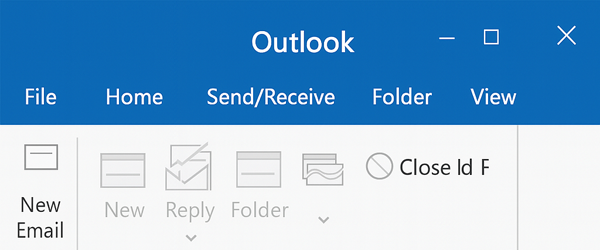
- Open Outlook on your Windows computer.
- If Outlook opens to your inbox, click File in the top-left corner.
- On the Info screen, click Add Account.
Step 2 – Enter your email address
- In the Add Account window, enter your full email address, for example
address@example.com.
- Click Connect.
Step 3 – Choose POP or IMAP
- When Outlook asks you to choose an account type, select either:
- POP (recommended to save server space and keep a local backup), or
- IMAP (recommended if you need full syncing between multiple devices).
Step 4 – Enter incoming mail settings (POP3 or IMAP)
Use the correct settings below based on the option you selected in Step 3.
Example: POP3 incoming settings
- Server:
{YOUR-SERVER-ID}.ourcontrolpanel.com
- Port: 995
- Encryption method: SSL/TLS
Example: IMAP incoming settings
- Server:
{YOUR-SERVER-ID}.ourcontrolpanel.com
- Port: 993
- Encryption method: SSL/TLS
POP3: Leave a copy of messages on the server (recommended for 7–14 days)
If you choose POP3, Outlook will normally download email to your device and remove it from the server. If you use more than one device (such as a phone + computer), you should set Outlook to “Leave a copy of messages on the server” so your other device has time to download the same email.
We recommend setting this to 7–14 days.
How to enable this in Outlook (Classic)
- Open Outlook.
- Click File → Account Settings → Account Settings…
- Select your POP3 account and click Change.
- Click More Settings…
- Go to the Advanced tab.
- Under Delivery:
- Check the box for "Leave a copy of messages on the server"
- Check "Remove from server after X days"
- Set it to 7 to 14 days
- Click OK → Next → Finish.
Tip: If you want Outlook to save server space, DO NOT set it higher than 14 days.
- Enable it and set it to around 7 days if you use multiple devices and want time for them to download new mail.
- Disable it if you only use one device and want to free server space as soon as messages are downloaded.
Step 5 – Enter outgoing (SMTP) settings and finish
- Outgoing server (SMTP):
{YOUR-SERVER-ID}.ourcontrolpanel.com
- Port: 465
- Encryption method: SSL/TLS
- My outgoing server (SMTP) requires authentication: checked
- Use same settings as my incoming mail server: selected
Click Next or Finish. Outlook will test the account settings and, if everything is correct, your account will be added. Try sending a test email to address@example.com to confirm that both sending and receiving works.
Troubleshooting
- Outlook keeps asking for the password: Make sure you are using the correct email password. If needed, reset it in your hosting or email control panel and update it in Outlook.
- Cannot send email: Confirm that SMTP uses port 465 with SSL/TLS and that My outgoing server requires authentication is checked.
- Certificate or SSL warning: Verify that you are connecting to
{YOUR-SERVER-ID}.ourcontrolpanel.com. If the name matches your provider’s instructions, you can typically accept the certificate and continue.
- Mailbox full / quota errors: POP3 reduces server storage, but IMAP users may need to archive or delete older mail, or increase their mailbox quota.